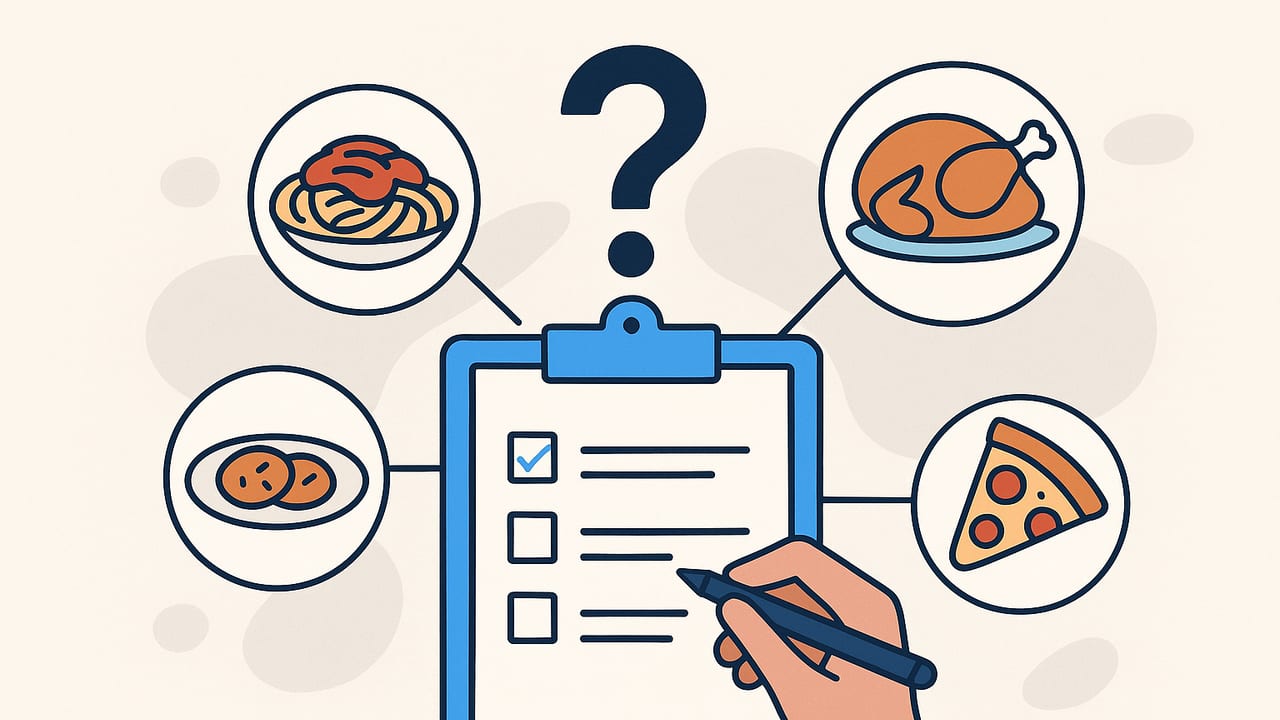
If you’re hungry, short on time, and wondering how to decide what to eat tonight, you’re not alone. Decision fatigue is real at the end of a long day, but dinner doesn’t have to be a puzzle. Use the simple frameworks below to move from “I don’t know” to “Dinner is done” in minutes—whether you cook, assemble, or order in.
How to decide what to eat tonight in 5 minutes
- Set a 60-second limit. Open your fridge and pantry, set a one-minute timer, and list 3–5 realistic options. Examples: leftovers, eggs and toast, frozen dumplings, sheet-pan chicken, taco takeout. A micro-deadline prevents overthinking.
- Pick your non-negotiable. Choose one must-have for tonight: budget-friendly, fast, minimal dishes, comfort food, protein-heavy, veggie-forward. This instantly filters your list.
- Match your energy, not your ideal self. Be honest: do you have 10, 20, or 30 minutes of cooking energy? Align the option to your current energy, not what you wish you had.
- Gut-check your craving. Ask: Do I want fresh and crunchy, warm and cozy, spicy and bold, or cheesy and melty? The clearer your craving, the easier the pick.
- Decide, then commit. Make the call and start the first step within 30 seconds—preheating the oven, boiling water, or placing an order. Momentum ends indecision.
Build a quick dinner decision matrix
When several ideas sound good, a tiny decision matrix can help you compare options objectively. Score each factor from 1 (low) to 5 (high) according to how well it meets tonight’s needs. Total the scores and choose the winner.
| Option | Time (min) | Cost | Effort | Craving Match | Cleanup | Total |
|---|---|---|---|---|---|---|
| Leftovers + side salad | 5 | 5 | 5 | 3 | 5 | 23 |
| Eggs, toast, sautéed greens | 4 | 5 | 4 | 3 | 4 | 20 |
| Sheet-pan chicken & veggies | 3 | 4 | 3 | 4 | 4 | 18 |
| Taco takeout | 4 | 2 | 5 | 5 | 5 | 21 |
| Frozen pizza + bagged salad | 4 | 4 | 5 | 4 | 4 | 21 |
| Soup & grilled cheese | 4 | 4 | 4 | 4 | 4 | 20 |
Tip: If one factor is tonight’s deal-breaker (like budget or speed), weigh that factor double when totaling.
Fast filters: what actually matters tonight?
- Budget: Under $5 per person? Favor pantry meals, eggs, beans, rice bowls, pasta, and leftovers reimagined.
- Time: If you want to eat within 15 minutes, pick no-cook, microwave, or stovetop-only options. Oven-based meals suit 30–40 minutes (hands-off).
- Energy: Low energy calls for fewer steps and fewer dishes. Think one-pan, sheet-pan, or single-bowl meals.
- Nutrition: If you want balance, aim for protein + produce + carb. Example: rotisserie chicken, microwave rice, and frozen veggies.
- People: Kids or guests? Offer two flavors of the same base (e.g., pasta with red sauce and a pesto drizzle on the side).
- Staples: Check for anchors like eggs, tortillas, rice, pasta, frozen veg, canned beans, and jarred sauces—these turn “nothing to eat” into dinner fast.
Pantry-to-plate formula: base + booster + finish
Use this flexible template to turn what you have into a satisfying meal without a recipe.
| Base | Flavor Boosters | Quick Add-ins | Finishers |
|---|---|---|---|
| Rice, noodles, tortillas, bread, potatoes, greens | Jarred pasta sauce, curry paste, miso, salsa, pesto, soy sauce | Frozen veg, canned beans, rotisserie chicken, canned tuna, tofu, eggs | Lemon/lime, herbs, chili crisp, yogurt, nuts, cheese |
Try these quick combos:
- 15-minute curry bowl: Microwave rice + frozen mixed veg + coconut milk + curry paste; finish with lime and cilantro.
- Egg fried rice: Day-old rice + eggs + peas + soy sauce + sesame oil; finish with scallions and chili crisp.
- Sheet-pan pita pizzas: Pita or naan + jarred sauce + cheese + any leftover veg; finish with arugula and olive oil.
Choosing for a group without drama
- Offer three clear options. Present a short list that meets everyone’s needs (e.g., stir-fry, tacos, pasta).
- One veto per person. If someone uses a veto, they also suggest the replacement so the list stays short.
- Rotate the chooser. Tonight’s decider picks the cuisine; the group picks the exact dish within it.
- Agree on guardrails. Allergies, dietary needs, and budget set the boundaries before you brainstorm.
- Deconstruct to satisfy preferences. Serve components separately (protein, veg, carb) so each person can assemble it their way.
Quick paths based on energy level
No-cook (5–10 minutes)
- Mediterranean snack plate: hummus, pita, olives, chopped veggies, canned tuna or chickpeas.
- Caprese toast: bread, mozzarella, tomato, basil, olive oil, balsamic.
- Rotisserie chicken wraps with bagged slaw and a squeeze of lime.
10-minute stovetop
- Garlic butter shrimp with microwave rice and frozen broccoli.
- Veggie omelet or scrambled eggs with toast and fruit.
- Black bean quesadillas with salsa and avocado.
20–30-minute, mostly hands-off
- Sheet-pan sausage, peppers, and potatoes with mustard.
- Baked salmon with lemon, plus couscous and steamed green beans.
- Oven nachos: chips, beans, cheese, tomatoes, jalapeños; finish with sour cream and cilantro.
Order-in, smarter
- Pick one indulgent item and one fresh side (e.g., pizza + salad, tacos + charred corn).
- Choose cuisines that reheat well for tomorrow’s lunch (curries, fried rice, pastas, stews).
- Scan for family bundles or lunch specials that are still available at dinner.
Make dinner decisions easier next time
- Stock five anchors: Eggs, tortillas, rice, a frozen veg mix, and a versatile sauce (pesto, salsa, or teriyaki). These convert nearly anything into a meal.
- Create a personal “Decision Menu.” List 10 go-to dinners you can make in under 20 minutes with stuff you usually have. Keep it on your fridge or phone.
- Theme nights reduce choice. Tacos Tuesday, Pasta Thursday, Stir-Fry Friday. Within each theme, rotate proteins and sauces for variety.
- Cook once, eat twice. Make double rice/grains and roast extra veg on the weekend. Future-you will thank present-you.
- Freezer = future dinners. Portion leftover soups, cooked beans, chili, or pulled chicken in flat freezer bags for quick thawing.
- Default orders. Save one balanced, budget-friendly order for each favorite cuisine so ordering takes 30 seconds, not 30 minutes.
- Keep micro-notes. When a quick dinner hits, jot it down. When something flops, note why. You’re building your own playbook.
Tonight's Dinner Decision Menu (example)
- 10-min: Eggs + greens + toast
- 15-min: Black bean quesadillas + salsa + slaw
- 20-min: Sheet-pan chicken + carrots + potatoes
- No-cook: Hummus plate + pita + chopped veg
- Order-in default: Veggie curry + rice (family pack)
Fun tie-breakers when you truly can’t choose
Sometimes you’ve narrowed it down to two or three good options and you’re stuck. Use play to break the tie and move on:
- Coin flip test: Assign heads/tails, flip, and notice your reaction. If you’re disappointed, choose the other option.
- Spin or shuffle: Put 6 options on a wheel or write them on slips. Let chance decide—and enjoy the surprise.
- Odd-even roll: Roll a die: odd = cook, even = order; then roll again among the finalists.
“If everything sounds good, nothing will get cooked. Make one small move—start the pan, preheat the oven, or place the order—and the decision makes itself.”
If you like using playful tools to end indecision—like a wheel spinner, coin flip, or random number generator—an iOS app such as Decision Chooser keeps those options handy offline so you can pick dinner and move on with your evening.
Putting it all together tonight
Try this rapid sequence right now:
- List three options you could realistically eat within 30 minutes.
- Choose one must-have (cheap, fast, comforting, healthy, minimal dishes).
- Run the top two through the matrix (time, cost, effort, craving, cleanup).
- Break a tie with the coin flip test or a quick spin.
- Start the first step immediately. Momentum beats indecision every time.
With a few simple filters and a tiny bit of structure, deciding what to eat becomes a two–five minute routine instead of a nightly debate. That’s the real win—less time choosing, more time enjoying your meal.
