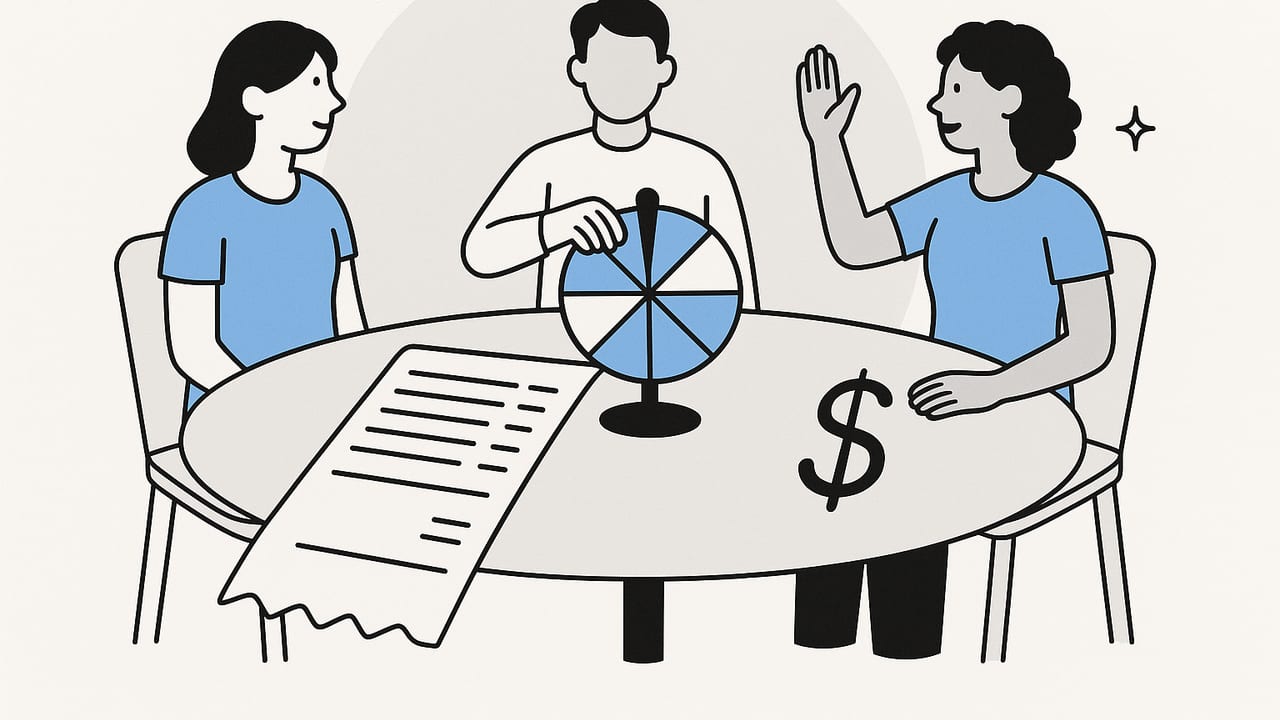
Few moments feel as universally awkward as the pause after the server drops the check. Do you split it? Does someone treat? Do you randomize it for fun? Whether you’re out with friends, on a date, or at a team dinner, it helps to have a plan. This guide covers simple, fair, and lighthearted ways to decide who pays the bill tonight—plus etiquette tips, ready-to-use scripts, and a step-by-step framework you can try immediately.
Done right, choosing a payer becomes part of the fun rather than a source of stress. From quick coin flips to rotating systems and low-pressure mini games, you’ll find an approach that fits your budget, group dynamic, and mood.
Before You Decide: Ground Rules That Keep It Fair
Set the stage with a few quick agreements. These keep the process fair, friendly, and considerate of everyone’s situation.
- Consent first: Ask if everyone’s okay using a picker or game to decide who pays the bill tonight. A simple, “Are we cool letting a quick random pick decide?” works wonders.
- Budget check: Respect limits. If the total is high, consider splitting or setting a max for any single payer.
- Opt-out is okay: Make it easy for anyone to opt out without explanation. No pressure, no shame.
- Tip honestly: If someone pays the bill solo, clarify whether others will cover the tip or if the payer covers everything. Keep the staff out of your group’s decision.
- Keep it friendly, not competitive: Avoid bets that escalate or involve alcohol. Choose quick, low-stakes methods.
Fast, Random Methods to Decide Who Pays
Random picks are fast, fair, and drama-free. They remove bias and keep the mood light.
1) Coin Flip (for two people)
Classic, clean, and instant. Call it in the air. If it’s a big bill or a regular dinner, alternate who calls each time.
- Pros: Fast, transparent, fair.
- Cons: Only for pairs; someone may feel unlucky if it keeps going against them.
2) Spin-the-Wheel (for groups)
Everyone’s name goes on a wheel; one spin picks the payer. Add a “Split Evenly” slice if you want a chance to split.
- Pros: Fun reveal, great for groups.
- Cons: Needs a wheel or app; set a budget rule for large bills.
3) Finger Chooser (crowd-friendly)
Everyone places a finger in the center of the table or on a phone screen and you randomly select one. It’s fast and inclusive.
- Pros: Zero prep, great energy.
- Cons: Requires a clean surface and mutual comfort.
4) Random Number Pick
Assign each person a number; draw one at random. You can use dice, cards, or a randomizer.
- Pros: Scales to any group; perceived as very fair.
- Cons: Slightly less playful unless you add flair (drumrolls, countdowns).
5) Card Draw: High Card Pays
Shuffle and draw; the highest card pays. Reverse it to “lowest card pays” if your group prefers.
- Pros: Tactile, fun suspense.
- Cons: Needs a deck; can feel like “bad luck” for the payer—set a max to keep it friendly.
6) Last Digit Lottery
Pick a neutral source (the last digit of the receipt total, or the minute hand on the clock). Map digits to names, then reveal.
- Pros: Uses what you already have; transparent randomness.
- Cons: Needs clear mapping to avoid confusion.
7) Restaurant Roulette (with caution)
Some groups play “bill roulette,” where one person pays the entire bill randomly. Only do this if everyone knowingly agrees and the total won’t strain anyone’s finances.
- Pros: Big thrill; memorable.
- Cons: Risky; not suitable for high totals or mixed budgets.
Lighthearted Skill-Based Picks
Skill-based choices make the moment playful—just keep them short, fair, and friendly.
8) Rock–Paper–Scissors (best-of-1 or best-of-3)
Rapid and familiar. For groups, run a quick bracket; winner buys or winner chooses who buys.
- Pros: Universal, quick.
- Cons: Still luck-heavy; can feel repetitive.
9) One-Question Trivia
Ask a neutral question (city capitals, movie quotes). Define the rule: “Closest answer buys” or “Winner chooses split.”
- Pros: Engaging, conversational.
- Cons: Topic bias—avoid niche areas only one person knows well.
10) Mini Dexterity Game
Try a napkin basketball toss into a cup or a quick coin-on-knuckle trick. First success wins the privilege to choose how to handle the bill.
- Pros: Silly and memorable.
- Cons: Space and comfort dependent; keep it discreet in formal settings.
Context-Based Methods That Feel Natural
Sometimes the simplest answer builds on the situation itself.
- Rotating turns: If you dine together regularly, rotate who pays; settle differences over time. Works best when bills are similar.
- Who picked the place: The person who chose the restaurant decides the method (split, random, or treat). It spreads responsibility.
- Birthday or milestone rule: If someone’s celebrating, the group treats—or the honoree chooses how to split.
- Income-aware variant: A quiet agreement that higher earners treat more often. Only if all parties truly prefer this; never assume.
- New-person pass: First-time joiners are automatically exempt; the rest decide who pays the bill tonight.
When Paying Solo Doesn’t Fit: Smart Splitting Options
Some nights, a random payer isn’t right—maybe the bill is large or orders vary. Here’s how to split fairly without fuss.
- Even split: Easiest for similar orders. Great for casual group dinners.
- Itemized split: Each pays for what they ordered, plus tax and tip. Many venues and payment apps make this easy.
- Hybrid split: Evenly split shared items (apps, bottles), then individually cover mains or extras.
- Pre-set per-person budget: Agree “$25 each to the pot,” with any excess covered by volunteers or the group fund.
- Tip etiquette: Decide tip upfront. If someone treats, others can offer to handle the tip as a friendly middle ground.
Comparison: Popular Ways to Decide
| Method | Fairness | Fun | Speed | Best For | Notes |
|---|---|---|---|---|---|
| Coin Flip | High | Medium | Very fast | Pairs | Alternate who calls each time |
| Spin-the-Wheel | High | High | Fast | Groups | Add a “Split Evenly” slice |
| Random Number | High | Medium | Fast | Any size | Transparent, impartial |
| High Card Draw | High | High | Fast | Groups | Set a max bill safety rule |
| RPS | Medium | Medium | Very fast | Pairs/small groups | Run a quick bracket |
| Rotating Turns | Medium | Low | Very fast | Regular meetups | Balances out over time |
A Simple “Bill Decider Night” Framework
- State the plan: “Let’s decide who pays the bill tonight with a quick, fair pick.”
- Offer options: “Wheel, number draw, or even split—preferences?”
- Confirm consent and limits: “Everyone okay with this? Cap at $X if needed?”
- Run the pick: Keep it quick and visible.
- Settle tip: Clarify whether the payer or the group handles it.
- Celebrate the result: Keep the energy upbeat and appreciative.
Scripts That Remove the Awkwardness
Use these ready-made lines to keep the moment light.
Friends: “Quick and fair—spin for who treats, and if it lands on me, you all owe me dessert next time.”
Couples: “Heads I treat, tails you do, and next time we swap who calls it.”
Coworkers: “Let’s do a quick random pick with a $40 cap; otherwise we split evenly. Works?”
Mixed budgets: “I’d prefer to split tonight. Anyone want to opt into a fun pick for the tip?”
Common Pitfalls to Avoid
- Ambushing the group: Never spring a high-stakes decision without asking.
- Ignoring budgets: If the total creeps up, switch to a split or set a cap.
- Overcomplicating games: Keep it to under a minute. Long games feel like pressure.
- Public performance: Keep games discreet; respect the venue and staff.
- Winner’s guilt or loser’s shame: Normalize whichever outcome happens. Gratitude over gloating.
FAQ: Quick Answers
What if someone always “loses” the randomness?
Alternate responsibility next time, or switch to even splits for a while. You can also add a “Split Evenly” outcome to your random method so it doesn’t always fall on one person.
How do we handle a big or unpredictable bill?
Set a cap for any single payer, then split the remainder evenly. Alternatively, use a random pick only to decide who covers the tip or dessert, not the entire meal.
Can we decide who pays the bill tonight remotely?
Yes. Use a group call and a shared randomizer. Screen-share a spin-the-wheel or have one person roll physical dice on camera.
What’s the fairest option for mixed orders?
Hybrid splits are ideal: split shared plates evenly, and have people cover their own mains and special drinks. It’s transparent and friendly.
How do we keep it fun, not awkward?
Use a clear, agreed method; keep it quick; and celebrate the result. A cheerful “Thanks for playing along!” goes a long way.
Putting It All Together
When you decide who pays the bill tonight, remember the three keys: consent, clarity, and speed. Agree on a simple method, confirm comfort and budget upfront, and run it in under a minute. Random tools (coin flip, spin-the-wheel, number draw) offer the cleanest fairness, while context-based rules and smart splits keep things considerate when totals vary.
Use the framework, borrow a script, and focus on the shared experience—not the math. That way, the check moment turns into a little burst of connection instead of a pause of discomfort.
Tip: If you prefer a quick, offline picker you can pull out anytime, an iOS app like Decision Chooser includes simple tools such as Finger Chooser, Spin the Wheel, Coin Flip, and a Random Number Generator, making fair, fast bill decisions easy on the spot.
