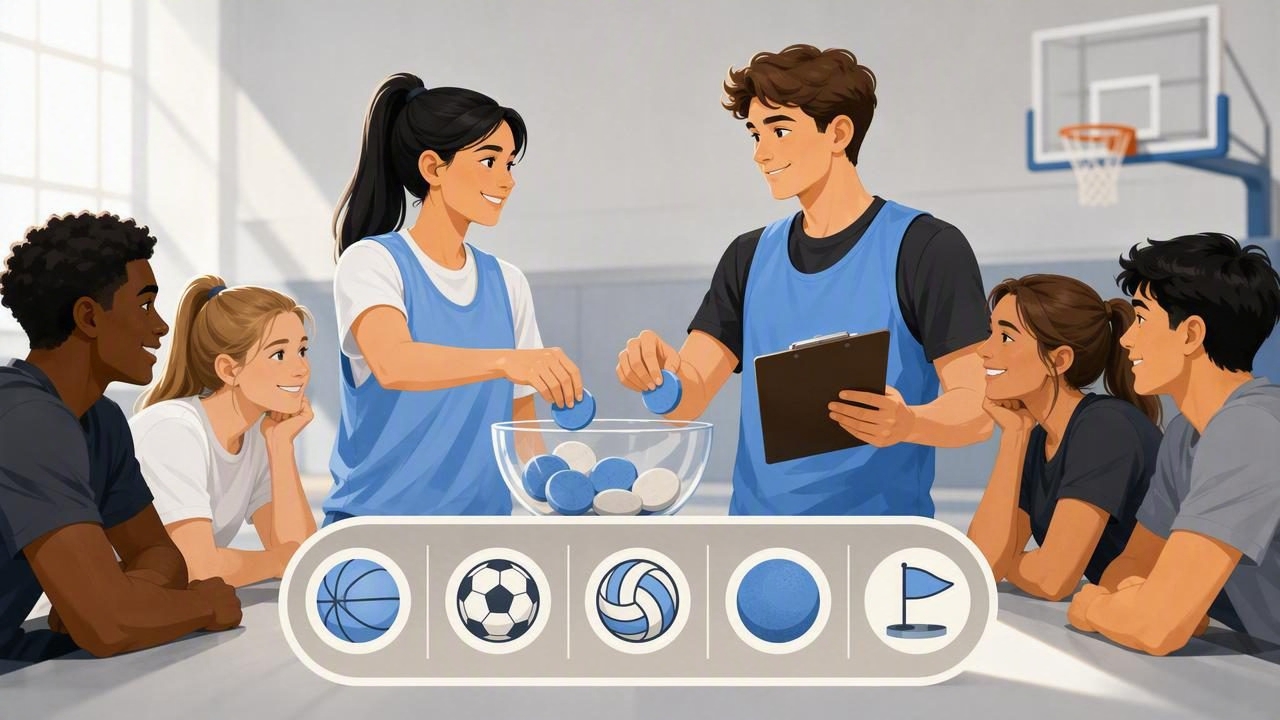
When a group wants to play but cannot agree on what game to play, the discussion can take longer than the game itself. One person wants basketball, another wants a board game, and someone else suggests a video game that only half the group knows. A simple, fair process keeps the energy moving and helps everyone feel included.
A team captain picker can be part of that process. Although it does not choose the game on its own, it gives a group a quick way to select leaders who can help narrow down options, pick teams, or make a final choice when the group is stuck. Used thoughtfully, it turns an awkward debate into a short, enjoyable activity.
This guide explains how to decide what game to play with a team captain picker, when this method works best, and how to keep the choice fair for everyone involved.
Why Choosing a Game Can Be Surprisingly Difficult
Game choices are small decisions, but they often involve different interests, skill levels, time limits, and group sizes. A competitive game may excite some people while making beginners uncomfortable. A long strategy game may not suit a group with only 20 minutes available.
The problem is rarely that there are no good games. More often, there are too many acceptable options, and each person has a different favorite. Without a clear decision-making method, a group may:
- Spend too long debating instead of playing.
- Let the loudest person choose every time.
- Repeat the same game because it is the easiest suggestion.
- Leave quieter players out of the conversation.
- Start with frustration rather than a fun atmosphere.
A team captain picker creates structure. It gives the group a neutral first step: choose one or more people to help guide the next decision.
What Is a Team Captain Picker?
A team captain picker is any simple method for randomly selecting captains from a group. The captains may then choose players for teams, suggest game options, or make a final decision from a short list that everyone accepts.
The key word is randomly. A random selection process avoids assumptions about who should lead based on age, popularity, athletic ability, or who spoke first. It also makes the result easier to accept because everyone had the same chance to be selected.
For casual groups, a captain picker can be especially useful when the chosen game needs teams. It is also helpful when you need two people to represent different preferences before the group settles on one activity.
A Simple Two-Step Method: Pick Captains, Then Pick the Game
The most practical way to decide what game to play with a team captain picker is to separate the decision into two short stages. First, choose captains fairly. Second, use the captains and the group’s preferences to reach a game choice.
Step 1: Set practical limits before choosing captains
Before anyone is selected, take one minute to agree on the boundaries. This prevents captains from choosing a game that does not fit the situation.
Ask the group:
- How many people are playing?
- How much time do we have?
- Do we have enough space and equipment?
- Should the game be active, relaxed, competitive, or cooperative?
- Are there beginners, younger players, or people who need an easier option?
For example, if eight friends have 30 minutes at a park and one person cannot run comfortably, full-court basketball may not be the best choice. The group could agree that the game must work for eight people, fit within 30 minutes, and allow everyone to participate. Those limits make the final decision more useful.
Step 2: Choose one or two captains at random
Next, choose captains with a method everyone can see and understand. You might draw names, use cards, flip coins after narrowing down nominees, or use a random finger-based selection method.
For a small casual group, ask participants to place a finger on the screen and select one or two winners. Keep in mind that this style of picker is designed for 2 to 5 simultaneous fingers. That makes it a good fit for a few people standing together, but it is not the right tool for a large class, league, or crowd.
If more than five people want to participate, use a different transparent method, such as slips of paper or a numbered draw. The goal is not to force every situation into one tool; it is to use a method that the whole group can follow.
Step 3: Let captains create a short game list
Captains should not have unlimited power to choose any game they want. Instead, ask each captain to suggest one or two games that meet the group’s limits.
For instance, two captains might suggest:
- Capture the flag
- Relay race
- Four square
- Trivia teams
Keep the list short. Three to five options is usually enough. A long list simply recreates the original problem: too many choices and no clear way forward.
Step 4: Remove games that do not work for everyone
Before making the final pick, give every player a chance to flag a practical issue. This is not a veto based on personal taste; it is a quick check for real barriers.
A game can be removed if it:
- Needs equipment the group does not have.
- Will take longer than the available time.
- Excludes a player without a reasonable adjustment.
- Requires a space that is unavailable or unsafe.
- Has rules most of the group does not know and cannot learn quickly.
This step is important because fair decision-making is not only about random selection. It is also about making sure the available choices are genuinely workable.
Step 5: Make the final game choice
Once the list is short, use one of three approaches:
- Captain agreement: The captains agree on one game from the approved list.
- Group vote: Each person gets one vote, and the most popular option wins.
- Random final pick: If the group is evenly split, randomly choose among the remaining options.
The final random pick is useful when two choices are equally suitable. It prevents a 10-minute debate over a decision that does not need one.
Concrete Example: Eight Friends at a Weekend Get-Together
Imagine eight friends have gathered in a backyard. They have 45 minutes before dinner, access to a ball and open space, and a mix of confident and casual players. They want something active, but no one can agree.
Here is how the captain picker method could work:
- The group agrees that the game must take less than 45 minutes and include all eight players.
- Because many people are present, they choose two captains through a visible paper-slip draw rather than a finger picker limited to a few simultaneous participants.
- Captain A suggests kickball and relay races. Captain B suggests capture the flag and a passing game.
- The group removes kickball because they do not have enough space for a comfortable setup.
- They vote between relay races, capture the flag, and the passing game.
- Relay races and capture the flag tie, so they make a random choice between those two.
- They play capture the flag, with the captains helping choose balanced-enough teams through turns or a simple draft.
The result is not that everyone got their first choice. The result is that everyone had a clear opportunity to contribute, the decision took only a few minutes, and the group got to the fun part faster.
When a Team Captain Picker Works Best
| Situation | Why the method helps | Best approach |
|---|---|---|
| A small group cannot choose an active game | Captains quickly narrow down ideas | Pick two captains, then create a short list |
| A game needs two teams | Captains can guide team selection after the game is chosen | Choose captains first, then alternate picks |
| Two game ideas are tied | A neutral result ends the stalemate | Randomly choose between the tied options |
| Friends play together often | A rotating process avoids the same leaders every time | Exclude recent captains when practical |
Fair Rules That Make the Process Better
A captain picker works best when the group agrees on a few simple rules before the selection begins.
- Do not always pick the same people. If someone was captain last time, give others a chance unless they volunteer and the group agrees.
- Keep choices realistic. Suggestions should match the time, location, and group size.
- Let everyone speak briefly. Even a 10-second preference check can reveal an important concern.
- Use a tie-breaker in advance. Decide whether ties will be settled by a second vote or a random pick.
- Do not treat captains as permanent winners. Captains help organize one decision; they do not get to control every later choice.
These rules keep the method lighthearted while reducing the feeling that one person is being favored.
Common Mistakes to Avoid
Using captains to skip the group’s needs
Random captains can make a process fairer, but they should not choose a game that leaves people out. Confirm basic requirements before the final choice.
Making the choice more complicated than the game
If deciding takes 20 minutes, simplify. Limit the choices, use one round of voting, and accept the result. A quick choice is often better than a perfect choice that never arrives.
Confusing a captain picker with a full team-balancing system
A captain picker selects leaders. It does not automatically create evenly matched teams or guarantee that every player will feel the teams are equal. If balance matters, captains can take turns selecting players, or the group can use another simple method that fits the activity.
Make the Next Game Decision Easier
To avoid repeating the same debate every time, keep a small shared list of games that your group enjoys. Divide it into categories such as active games, indoor games, quick games, and cooperative games. When it is time to play, start with the category that suits the moment, then use captains or a vote to narrow the choice.
For small in-person groups, Decision Chooser offers a casual random finger selection option for choosing one or multiple winners. Its offline functionality can be useful when you are away from Wi-Fi or mobile service. See this random finger picker guide for a clear overview of how that type of choice works.
Ultimately, the best way to decide what game to play is the one your group sees as fair, quick, and easy to repeat. A team captain picker gives you a friendly starting point, while a short list and an agreed tie-breaker ensure that the game—not the argument—gets everyone’s attention.
