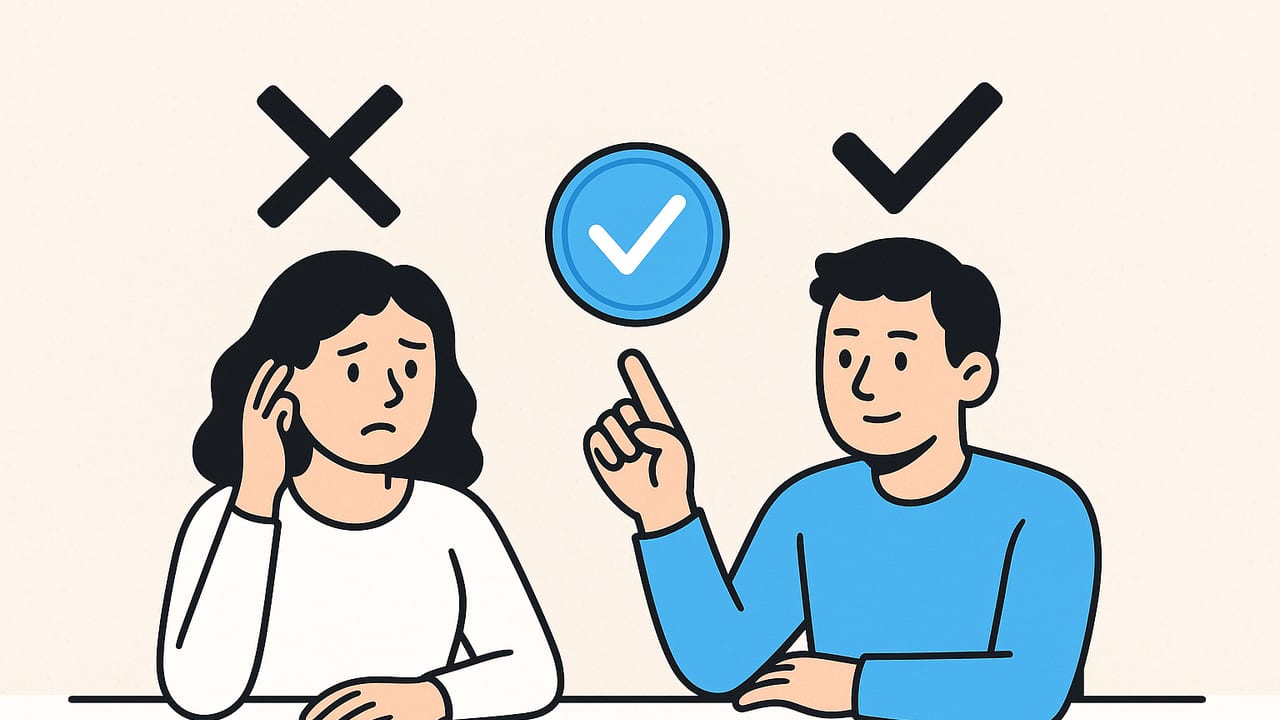
Every couple hits decision deadlocks—what to eat, which movie to watch, how to spend Saturday. The more you debate, the more it can slide from practical to personal. A simple, fair couple tiebreaker when you cannot agree prevents the spiral. Instead of winning or losing, you protect time, energy, and the relationship.
We don’t need to win; we need to decide.
Why Tiebreakers Beat Arguing
Tiebreakers are pre-agreed rules that end stalemates quickly. They work because they:
- Protect your time. You skip the 20-minute debate for a 60-second decision.
- Reduce resentment. Clear, fair rules stop decisions from feeling like power struggles.
- Balance influence. Nobody gets default control just because they’re louder, faster, or more persistent.
- Keep momentum. You get to the fun part—eating, watching, going—without lingering friction.
- Build trust. When both people commit to the outcome, the relationship feels safer.
The Best Couple Tiebreaker When You Cannot Agree
If you only adopt one rule, make it this:
Debate for two minutes. If you’re still stuck, use a fair randomizer and commit to the result.
This blends respectful discussion with a crisp finish. It’s the fastest way to avoid ruminating, second-guessing, or letting decisions eat your evening.
Quick Tiebreaker Rules for Everyday Choices
1) I Pick, You Choose (The Cake Rule)
One person proposes two (or more) acceptable options; the other chooses. The proposer must make every option truly acceptable. This helps when you’re close but not aligned.
2) Rotating Captain
Assign domains (or days) where each person is the “captain.” For example: food choices on weekdays alternate; weekend activities rotate. The captain’s choice stands—within agreed constraints (budget, time, dietary needs).
3) Two-Minute Timer + Randomizer
Set a two-minute limit to make your best case. If there’s still no agreement, flip a coin, spin a wheel, or use a random number. Crucial: both commit before the random draw.
4) Veto Tokens
Each person gets a small number of gentle vetoes per month—say, two. Use a token to skip a choice without drama. When tokens are gone, you default to the tiebreaker rules.
5) Split the Difference by Time
Alternate the choice across time. Tonight is your pick; next time is mine. This matters for series/TV picks, restaurants, and routine purchases.
6) Effort Rule
The person doing most of the work (driving, cooking, planning) gets the tiebreaker that time. Balance it across the week.
Randomizers That Feel Fair (and Fun)
Random methods work because they are obviously neutral. Use them to end stalemates without bruised feelings:
- Coin Flip—with a twist: Before you reveal the result, notice your gut reaction. If you feel disappointed, that’s useful information—switch if you both agree you uncovered a true preference.
- Spin-the-Wheel: Add your acceptable options. Seeing the wheel makes it playful and transparent.
- Random Number Generator: Great for longer lists (restaurants, activities) when you’ve filtered to “all acceptable” choices.
- Finger Chooser: Both place a finger; the picker selects fairly (e.g., clockwise elimination). Works well for quick chores or who goes first.
Whatever you pick, state the rule beforehand: “Two-minute chat, then random, and we both commit.” That pre-commitment maintains trust.
A Simple 3-Step Framework to End Stalemates
- Set constraints. Budget, time window, distance, dietary preferences, mood (cozy vs. lively). Constraints are guardrails that prevent bad outcomes.
- List acceptable options. Each person offers 1–3 options they’d be fine with. Cut anything that violates constraints.
- Apply your tiebreaker. Use the “I Pick, You Choose,” a brief debate plus randomizer, or the rotating captain rule. Commit and move on.
Example: Dinner Decision
Constraints: Under 30 minutes, within 3 miles, vegetarian-friendly.
Options: Thai, Mediterranean, pizza.
Tiebreaker: Two-minute chat; if stuck, spin a wheel with those three options.
Example: Movie Night
Constraints: Under 2 hours, light-hearted.
Options: Comedy A, Rom-com B, Adventure C.
Tiebreaker: “I Pick, You Choose”—one proposes two, the other chooses.
Example: Weekend Plan
Constraints: Free Saturday morning, $40 budget.
Options: Farmer’s market + picnic, museum, bike ride + coffee.
Tiebreaker: Rotating captain decides this weekend; the other gets next weekend.
Comparison: Which Tiebreaker Works Best?
| Method | Best For | Time | Emotional Load | Fairness | How to Use |
|---|---|---|---|---|---|
| Two-Minute + Randomizer | Everyday picks (food, shows) | Very fast | Low | High | Chat briefly, then flip/roll/spin |
| I Pick, You Choose | Close calls with few options | Fast | Low | High | One lists acceptable choices; the other decides |
| Rotating Captain | Recurring decisions | Instant | Low | High over time | Alternate control by day or domain |
| Veto Tokens | When one person strongly resists | Instant | Very low | Balanced monthly | Each gets limited vetoes |
| Effort Rule | Plan-heavy or labor-heavy choices | Fast | Low | Contextual | Whoever does the work decides |
| Random Number Generator | Long lists (restaurants, activities) | Fast | Low | High | Filter to acceptable list, then draw |
Scripts You Can Use Tonight
Food
“Let’s set constraints: under 30 minutes, near home, something warm. My options: ramen or Mediterranean bowls. You choose.”
Movie
“We want under 2 hours, nothing heavy. I’ll list two options; you pick. If neither, we do a quick spin with three acceptable titles.”
Chores
“We both want a clean kitchen and couch time by 9. Let’s Finger Choose who starts dishes; the other handles trash and counters.”
Weekend
“We’re at $50 max, and home by 3 p.m. It’s your captain day—pick from our acceptable list.”
Avoid These Common Pitfalls
- Moving the goalposts. Don’t change constraints after the draw. Set them first, then honor the result.
- Weaponizing random. Random isn’t a trick to force your favorite. Only include truly acceptable options.
- Overloading choices. Limit the list to 3–5 solid picks. Too many options invites analysis paralysis.
- Ambiguous vetoes. Define how many tokens you each have per month and what they cover.
- Relitigating decisions. Once a tiebreaker speaks, move forward. If you want to improve the system, discuss later—separately from the decision.
Larger Decisions Need a Slightly Different Approach
For bigger commitments (moving, pets, major purchases), don’t let pure random decide. Use a two-tier process:
- Alignment first. Clarify values and must-haves (budget, timing, responsibilities). Collect two or three options that fit both people’s minimums.
- Light tiebreaker second. If you’re split between acceptable options, use “I Pick, You Choose” or a randomizer after constraints and values are aligned.
Even big decisions benefit from a polite endgame; it just comes after deeper alignment.
Make Your Tiebreakers Stick
Turn your new habits into a tiny agreement:
- We set constraints first.
- We each offer acceptable options.
- If there’s no agreement after two minutes, we use a fair randomizer and commit.
- We rotate captain roles for recurring choices.
- We each have two veto tokens per month.
Post this on your fridge or notes app. The simpler the rules, the more you’ll use them—and the fewer tiny fights you’ll have.
FAQs
Isn’t random unfair if I really care?
Random is only for acceptable options after constraints. If you care strongly, say so before the draw. That’s what veto tokens are for.
What if the result feels wrong?
Use the coin-flip gut check: if the result stings, name the feeling. If both agree it revealed a true preference, adjust. If not, honor the rule and move on.
How do we keep it fun?
Turn tiebreakers into mini-rituals: a colorful wheel, a special coin, a quick drumroll. Fun reduces friction.
A Final Nudge
When you need a couple tiebreaker when you cannot agree, the best tools are the ones you’ll actually use. Keep rules short, make options acceptable, and choose a neutral decider. If you prefer having a friendly helper in your pocket, the iOS app Decision Chooser offers simple tools like Finger Chooser, Spin the Wheel, Coin Flip, and a Random Number Generator—customizable and available offline—so you can settle small stalemates and get on with the good stuff.
Bottom line: decide faster, fight less, enjoy more.
